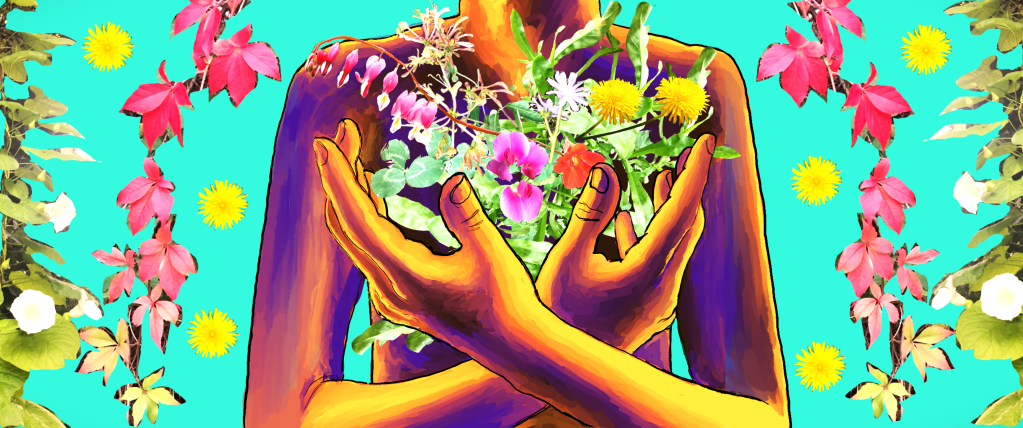

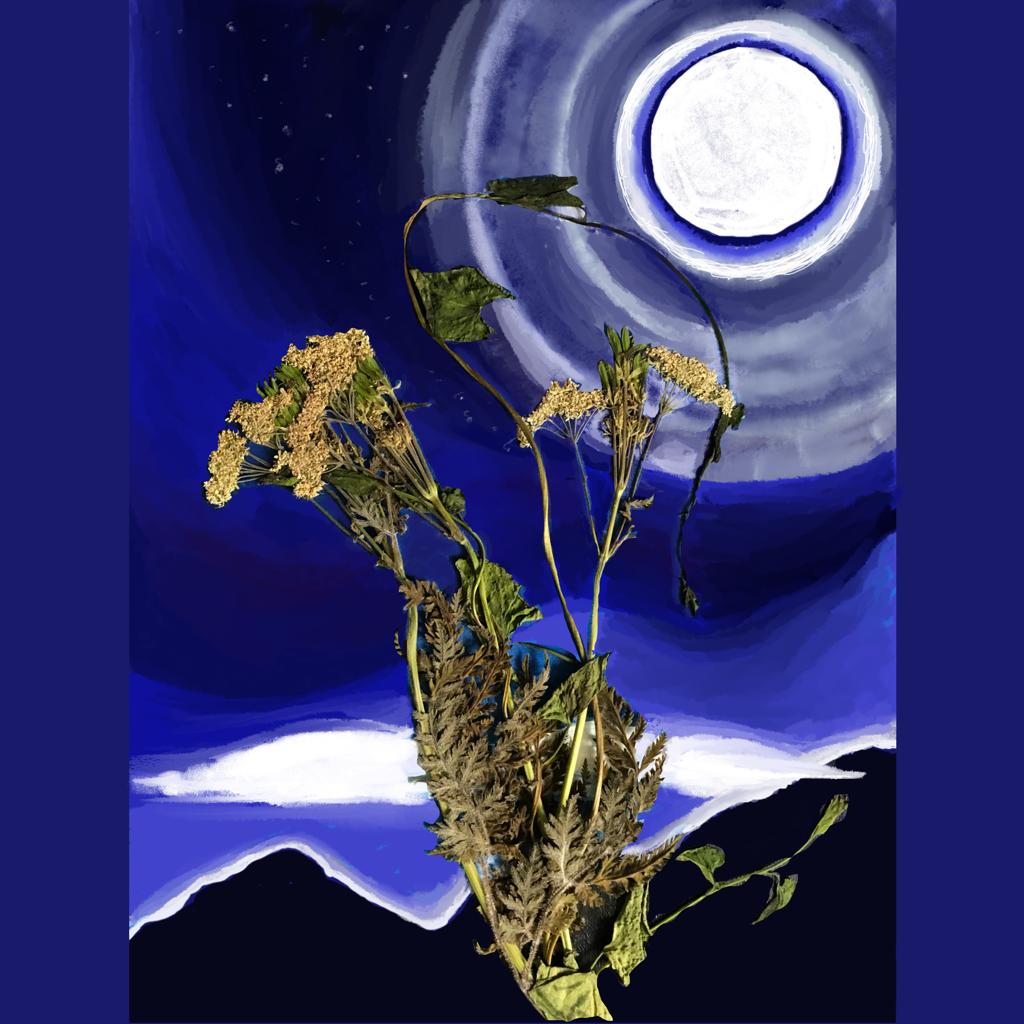
Sorcha’s new life is harder than the old, yet it does not subdue her fury of desire to be free.
Her fervour begins with a precious moment between herself and her mother when she’s still very young. Out in the woods, collecting things, she recalls. The day is hot and languid, of course, even though it is still early. Bright red berries emblazon the verges, and her mother plucks one, smiling. “See this,” her mother says in her warming tones, “it’s a wild strawberry. The taste of freedom.” She pops the berry into Sorcha’s mouth. Sorcha recalls holding it there for a moment, feeling its texture and shape with her tongue, before she allows herself to slowly chew it up, releasing its burst of flavour. It’s fresh, and she feels herself light up, and all she knows is she wants more of such exhilaration. She runs to the verge and scrabbles to pick more as fast as she can. “Sorcha, come on, you know we mustn’t be long,” her mother implores. Sorcha is shaken back into their reality by those words. Born to serve, she knows punishment would await them if it was suspected they’d been meandering in the woods. Still, freedom’s sweet taste lingers.
She doesn’t stay with her mother much longer. Each of them is sold in different directions. Sorcha is steeped in grief and loneliness, yet an intuition propels her that to keep living is to keep finding snatches of what it means to be free. As she goes about her litany of daily chores, she looks to the leaping lambs in the springtime, the soaring swallows overhead, the ping of the grasshopper as it takes itself from harm’s way. At night, lying in her skinny cot while others snore around her, she allows her body to move in the small ways it wishes from under her musty blanket. As her dreams alight, in her mind’s eye she moves like the flicker of firelight, and laughs into the starlit sky.
Sorcha starts to steal. She doesn’t know why, but it makes her feel wonderful, and she can’t get enough of the thrill. Sometimes it’s food from the kitchen; at others, it’s objects from around the house. A beautiful old fountain pen, although inkless, and she has no paper to make marks on. An ancient paperweight. A fine glass ornament of a swan, slightly chipped. She has nowhere to keep her trophies, so she makes a secret burrow behind the wood store, where she drops them off when she collects firewood for the house. She believes she’s become skilled at her craft, but one day, she’s caught dropping a necklace into the hidey hole. Her Owner commands that she be punished with a beating. Not long after, she is sold for the second time.
At the market, she is bought by a man who looks just like the other. These days, the men who Own are the only ones with that strange pale skin colour that no one has ever thought to come up with a word for. She’s shut into the back of an enclosed cart with all sorts of supplies from the market: live chickens and dead salted fish, crop seeds, sacks of oats and flour and such. The Owner and his driver sit up front and drive the horse. The journey to the new land is arduous. The terrain is lumpy and overgrown, the dusty wind whips up as usual, and the horse struggles to pull the cart along. Sorcha is hot and thirsty for many hours. Her saving grace is that she can see through the cracks in the back of the cart. She is stunned by the rolling beauty of lands she has not known before. And at one point, something curious; a whole group of people scramble by when they seem sure the cart has passed and that no one will look back.
Finally, they arrive in the new place, another vast and crumbling landed estate. Sorcha meets old Wilma, who has always been there. She will work with Wilma in the kitchen and on sourcing and processing supplies. Kindness sparkles from Wilma’s eyes, and as they begin to work alongside one another, their movements synchronise, even as little is said. As one finishes the chopping, the other grabs the pile of veg to tip it into the stew. As one knocks a pan, the other catches it from falling.
She becomes a cog in the clockwork of life on the estate. It’s easier that way. When the cogs run smoothly, the violence is minimal. The field hands haul their crops to the kitchen to be prepared for cooking or storage. Others bring baskets of mucky eggs and large jugs of milk. Then there are the twins – maybe young teenagers, but it’s hard to tell. Wordlessly, they leave their hunted game in the kitchen each day: rabbits, pheasants, even wild boar sometimes. Sorcha wonders how they find the strength to carry it; they are so gaunt and wiry, with too-large eyes. Often, they dart in and out, leaving their bounty before Sorcha realises they’d even been there.
For some weeks, Sorcha follows the rhythm and finds herself surviving. Then, one day, in error, she burns an oven full of food and is beaten for the loss. Her fury returns. Again, the urge to steal emerges, and she knows now why she does it; she is stealing little pieces of freedom for herself. She must start small, so she sneaks into the kitchen and slides a krill fish up her sleeve from a batch that is cooling on the side after being cooked. As she does, Wilma, who she’d thought was out of the area, snatches her wrist and hisses barely audibly, “Careful child.” For a second, she gives Sorcha a meaningful look and then continues her work as if nothing has happened.
A few days later, Wilma tells Sorcha to help collect supplies in the woods. More brash is needed for the fire, and it’s the season for mushrooms and nuts. Food is always hard to come by in the chaos of the climate, and they must not miss any opportunity. The weather mercifully seems to be in a lull these last days, and now is the moment. They take big baskets and sacks to load themselves up.
They walk mostly in silence for a good couple of miles, with Wilma hobbling on a bad hip. Suddenly, Wilma starts to speak, though still in hushed tones. Sorcha feels her own body freeze so that even the sound of her breathing will not get in the way of hearing Wilma’s words. “You need to understand, child, that this place is full of spies.” A pause as she stoops painfully to collect a flurry of hazelnuts. Then, “He has his men to do his bidding. They are men to be feared. The others like us – well, they gain their petty privileges from tattling on one another. My advice is to speak little and make sure your actions go unwatched.”
Things start to make sense to Sorcha when she hears these words. The others who are owned are so distant and cold. The pair walk on for a while before Sorcha decides how to respond. “Why is it like this?” she asks. “Why are people against each other? Why does no one try harder to be free?”
Wilma sighs before continuing at virtually a whisper. “That’s a complicated question, child,” she begins. “People fear freedom. They fear punishment for trying to get free. Freedom means pain. It means the unknown. It means the possibility of losing the small amount you have now. It means maybe being alone, so very alone. And people tried for so long, and they’re tired. Yes, we are a tired, tired people. Endless cycles of history have learned us that you cut off the head of the Hydra, and others will grow in its place…” She pauses. “I guess you haven’t heard the stories from Before?” Sorcha shakes her head.
“In all my years in this world, I’ve picked up on some things, though it’s long since I’ve heard anyone talk about them. It seems we’ve always lived in a troubled world. But I’ve heard that times were when a lot of people were more free than they are now. When many people didn’t have to break their backs for all the basics of life. Didn’t have to weave every inch of cloth or pound every handful of grain. People from back then – I’ve heard tell there were luxuries, more than you can possibly imagine, and not just for those who Owned. Things were organised. And then things fell apart. Everything. Most people died. A few men took all, but that goes without saying. They fought each other before they agreed on who owned what land and which people. Yes, they were the ones who started our slavery, which I’ve heard tell was never seen before in these isles, least not for some two thousand years, even if a few men always owned the great share of everything.”
Sorcha feels like she should always have known this story. She realises how alone she’s been that she’s had no idea until now – no one to tell her. “Didn’t people fight back when things were falling apart?” she asks tentatively.
“I’ve heard tell that some fought, but the Owners had most of the weapons and power. Most felt it easier to fall into line. Still do.”
“And what about you, Wilma? You seem to be doing okay around here. Where do you get your privileges from?”
“Well, it helps I’m so old,” she laughs, croakily. “It means no one notices me much. I do the Owner’s bidding and mostly talk to no one. I’m only talking to you now – well, I don’t know why, but it was something about you. But lying low is enough these days to be left alone. I tattled once, long ago. I still carry the weight of the guilt and shame. It did not end well for that person.”
They carry on collecting the nuts, mushrooms and brash. At one point, Wilma gasps as Sorcha almost adds a death cap to the mushroom mix. “Child, what are you trying to do? All our work will be checked!” She realises then how paranoid the Owner must be. But maybe he’s right to be. The weather starts to turn, and they hurry back to the house as best they can with Wilma’s limping to avoid the oncoming storm.
The day in the woods is the last time Sorcha will ever see old Wilma. The next day, Wilma has completely disappeared. Sorcha cannot overcome her fear so that she may ask anyone what’s happened. Had they been spied on when they had their conversation? And if that was so, why is it only Wilma that has been punished? She’s distraught that Wilma has gone but keeps her expression impassive and lies low.
Time passes, and as Sorcha mostly works alone in the kitchen, she starts to tinker again with freedom. For a while, when she’s finished her chores for the day, she makes little hanging mobiles from yarn and pretty things from the ground – smooth twigs and seed heads and leaves. She hangs them from the branches of bushes and trees and watches them spin in the wind. It brings her some joy, but it isn’t enough for her. Again, she starts to steal, but with greater stealth. When she makes bread rolls, she takes a pinch of dough from each one to make one extra for herself. When the Owner wants her to pour his gin, she saves herself a splash.
One night, she dreams of being in the cart again on the journey to this place. She sees the same group dash past. Somehow, they can see her in the back of the cart. They stop and beckon to her to come with them.
Sorcha wakes abruptly from the dream and knows that her path is to find those people. In the following days, she starts to prepare for escape, hoarding food that will keep for some time – oatcakes, salt fish, dried mushrooms and prunes. From the kitchen, she slips out a knife, and a sack to carry her things. She doesn’t know where she’s going, but the people must still be out there, and she will find them. She stays up late in the kitchen, baking bread and brewing beer. At midnight, she does not go up to bed but slips out the back door and into the howling night, convinced she has not been seen.
The day that Sorcha is bought for the second time, her new Owner takes himself by surprise. He hadn’t intended on purchasing anyone else that season, but she’s going cheap as a skilled kitchen hand. Old Wilma is getting slow in the kitchen, and he’s starting to get frustrated at how long the meals take to arrive, so it suddenly makes sense to buy her. And somehow, he’s intrigued by this slave girl. There’s a reason for her low price, but he will not find out why from the seller. She’s a young adult, tall and strong-looking – should be a good worker. But there’s something about her that’s different. Partly, he wants the extra staffing, and partly, he’s bored and wants to watch her every move. Something to do.
He brings her back and tells his spies to keep watch. He comes to know how she steals moments for herself, takes food, and drinks his wine and gin. He loves how brazen and scared she is at the same time. When will she push the envelope again? He makes little predictions and bets with himself.
He realises it’s time for Wilma to go. He hadn’t recognised that she’s still a problem after all this time. And anyway, her time is up. She isn’t serving him well any more. No sense in keeping old stock past its prime.
As time passes, he sees Sorcha prepare to run away. The spies feed him little pieces of information that make it all clear. He looks forward to her attempt at departure. This is where he will have his fun.
The night she looks set to depart, he plants a spy to keep watch from above the kitchen, peering through the ceiling boards. He starts a game of poker with his men in the drawing room. They drink large whiskeys and grow loud and uncouth in ways that have gone unrestrained for a few hundred years.
The spy enters the room and gives the Owner a nod. He waves her off. With such a strong hand, he’ll finish his poker game before the pursuit begins. And it’ll give a little more challenge for one who has the hunt in his blood.
He ends the poker game with a full house, and none have the hand to beat him. “Gentlemen, the time has come,” he says with an air of power and control. The four men grab a lantern each. He asks one of them to release the beagles and another to fetch a dishcloth from the kitchen for Sorcha’s scent. They head to the stables and mount their horses. It’s time for the hunt to begin.
Sorcha is back in the kitchen again. She tends to her bruises and bite marks and swellings; still in shock, almost detached from her body. In some far-off corner of her mind, she wonders what’s next. Will she be sold in the morning? Will she be punished some more?
The morning comes, and it’s a surprise to find it’s almost like the day before. Nobody looks her in the eye or breathes a word. One of his men enters the kitchen and tells her to make double the lunch quantity as usual. That’s it, nothing more. She doesn’t know how her body will manage the lunch, but she will find a way.
Life continues; her wounds begin to close. And again, she finds herself obsessively hankering after freedom’s sweet taste. The night that she’d run, there was only elation. She hadn’t been fleeing – only searching, only running towards. She decides that her pursuit is something to live for, even if she will never truly know what full freedom means. Her devotion renews itself, and she commits herself to improving her skill. When the time is right, she will try again.
.
The twins have also always been there, all their born years, though they are still only early teens. Without explanation, their parents were sold on when young, leaving the twins to a life of enduring petty betrayals from the others on the estate. Even old Wilma paid them no heed. Maybe she mistrusted them – regarded them as strange and silent creatures as they left their gifts of game in the kitchen every day for her to prepare. So they are friendless but for each other, and they learn to speak with their eyes and spy on the spies. As they grow, they refine their craft between them and mostly find ways of keeping the upper hand.
From the day that Sorcha arrives, they start to watch her, and they watch the other watchers watching her also. They begin to learn what freedom tastes like, copying her little bodily flourishes as she turns a corner, thinking that no one sees, as she stoops to scoop up a hand of wild strawberries from the verge and sips straight from the Owner’s whiskey decanter.
When Sorcha starts to prepare to run away, they do nothing but watch. They wait to see how things will pan out.
When she prepares for the second time around, the twins see all eyes upon her. Now is their moment as none see them any more.
Tonight must be the night; Sorcha looks tense and alert as she bustles about the kitchen. Her sack of supplies is hidden in plain sight beside the sacks of flour.
The Owner and his men finish supper and withdraw to the drawing room for their games. Sorcha slips out. The twins scamper off. Every move they make must be done with the utmost care from now on. They have time until the Owner and his men emerge, but they still run like the wind to collect the beagle they’d kept back to track Sorcha’s scent. They retrieve it from an old pig sty out in the fields, as they couldn’t risk the noise of its yapping being heard from closer to the house. One ties a rope around it as a lead, allowing it to sniff the dishcloth Sorcha uses. The other collects the snares.
Even with the care she’s taken, everyone knows the route out of the estate that Sorcha took to leave – this is part of the game. The twins scrabble through the fields to get to her pathway without being seen themselves. They stop only to set the snares along the path behind them and follow the beagle into dense woodland. They may know nothing of where they’re going but know that Sorcha is out there, and they will find her. They run towards.
When the Owner gets the signal that she’s gone, again he delays for a while, this time more than the last. Eventually, they leave to fetch the dogs and horses.
It’s not long before he’s told that the beagles are all dead. Looks like a poisoning, maybe from mushrooms. The Owner roars with indignation and commands his men to ride out into the night, to keep the hunt going until they find her. He swears to them all that he will never let her go.
 From The Heart Grows Wild
Leave a comment